


 Categories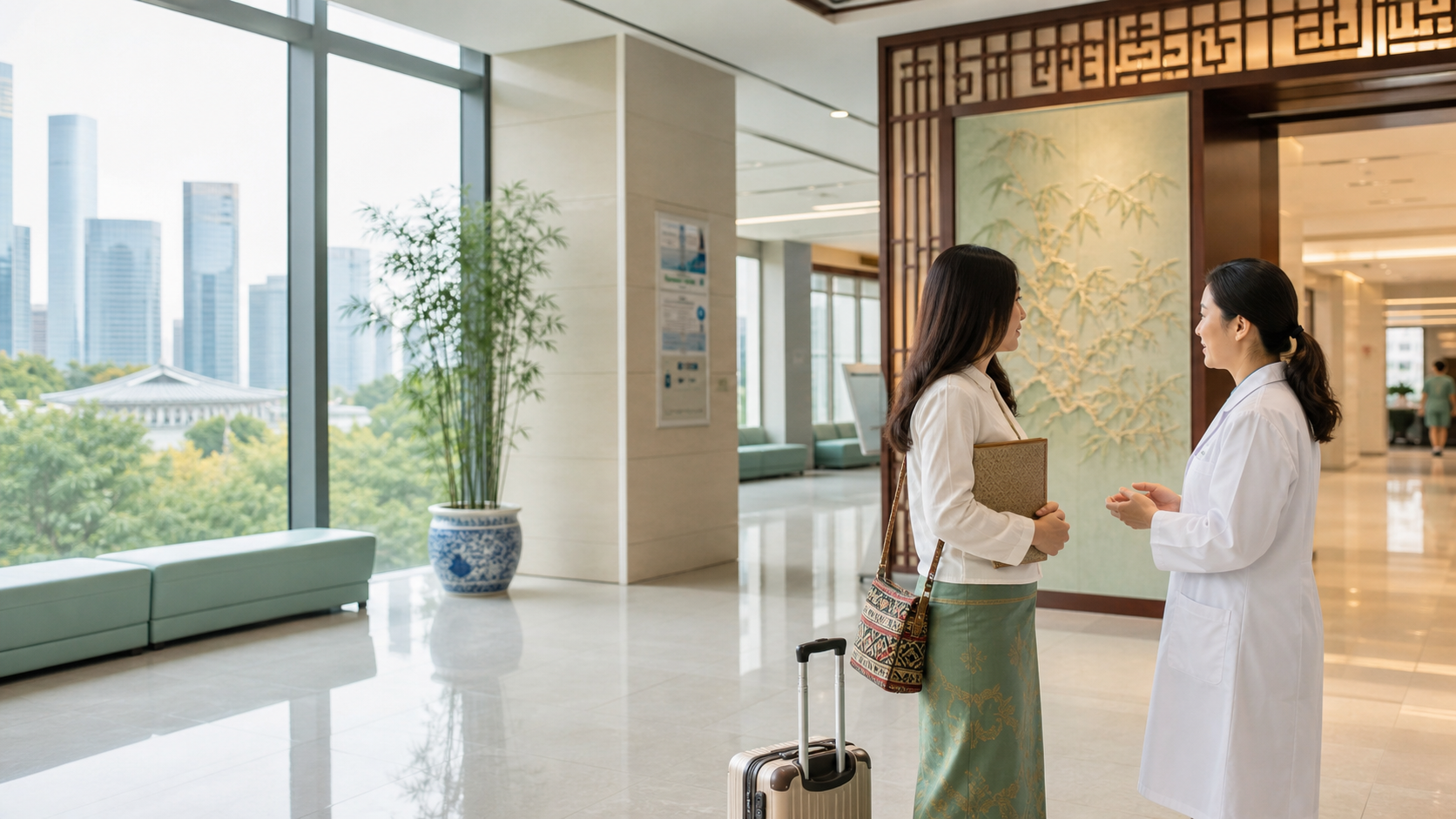




If this is your first time travelling from Hong Kong to mainland China for a medical appointment, feeling a little nervous is completely normal. The biggest questions are usually practical ones: how do I book the right department, what documents will I need, will the hospital accept my identity documents, do I have to pay before a test, and can I take the records back to Hong Kong? Think of this as a calm, practical checklist that you can work through before you buy a ticket.
One important boundary comes first. Chest pain, severe breathing difficulty, heavy bleeding, sudden weakness, loss of consciousness and other emergencies should be handled through emergency care where you are. A cross-border trip is not a substitute for urgent treatment. The guidance below is for planned outpatient care, specialist opinions, investigations, follow-up visits and treatment that has already been discussed. Mainland and Hong Kong healthcare systems do not use exactly the same booking and payment processes, so a little preparation can save a lot of stress.
Start by deciding what kind of visit you are planning
A specialist opinion, a diagnostic test or a routine follow-up can often fit into a short trip. A procedure involving sedation, anaesthesia, surgery, admission or rehabilitation needs a very different plan. Results may not be ready on the same day, a doctor may want to review additional images, or you may simply not feel well enough to travel home immediately. Keep your transport and accommodation flexible if possible, and leave a buffer rather than building an itinerary that depends on every appointment running perfectly.
Write down what you want from the visit in three to five sentences. Are you trying to confirm a diagnosis, compare treatment options, manage one symptom or arrange longer-term follow-up? A short problem summary helps the consultation stay focused and makes it easier to notice whether your questions were answered.
Book through an official channel and check your documents
Do not book a ticket first and assume you will sort out the hospital after arrival. Use the hospital's official website, verified WeChat account or official mini-program to check the department, campus, clinic date, booking rules, accepted identity documents and first-visit requirements. Large hospitals may have several campuses, and the same specialty may not be offered at the same address every day. Save the appointment confirmation, registration number, department, campus address and phone number as screenshots and offline files.
For travel and registration, carry a valid Hong Kong identity card and a valid Home Return Permit or another accepted travel document. The latest requirements should always be checked with Hong Kong Immigration. Make sure the name on the appointment matches your document exactly, including the spelling of your English name. If someone else books for you, ask them to send the confirmation, payment record and hospital instructions together.
Build a simple medical-record pack
The most useful format is a one-page summary plus the complete supporting records. Put the start date of your symptoms, the main problem, previous tests, earlier diagnoses, current medicines and allergies on the first page. Bring recent laboratory results, imaging reports, pathology reports, discharge summaries and prescriptions. If you have CT or MRI studies, bring the actual image files or DICOM when possible, not only the written report.
Keep medicines in their original packaging and make a list of the generic name, strength, dose, frequency and last dose. Include supplements, traditional medicines, contraceptives and blood thinners. Photos are useful backups, but do not rely only on your camera roll. Name files by date and type, store them in a folder that works offline and keep a second copy with someone you trust.
Hong Kong's eHealth system may allow eligible users to share selected health records with designated or recognised mainland medical institutions. Official information says users can request the sharing of health data from the previous three years before cross-boundary care; some specified institutions can also place radiology reports and images into the Personal Folder. Log in before you travel, check your phone number and understand the authorisation and QR steps. It is much easier to solve a login problem at home than at a reception desk.
Ask payment and insurance questions in writing
Many mainland medical processes involve payment before a test or treatment. An appointment confirmation does not necessarily mean that the final cost is fixed. Ask the hospital how registration is paid, whether Hong Kong cards are accepted, whether payment must be in renminbi, when test fees are due, whether an admission deposit is required and whether you will receive an official invoice, itemised statement and reports. For surgery or admission, ask for a written estimate and confirm whether anaesthesia, medicines, consumables, room charges, follow-up and possible additional items are included.
With insurance, do not stop at “is it covered?” Ask whether the policy covers mainland China, outpatient or inpatient care, pre-authorisation, direct settlement and the exact hospital network. Some hospitals may not be able to settle directly with a Hong Kong or overseas insurer, so you may need to pay first and claim later. The Hong Kong Economic and Trade Office also advises patients to check these arrangements carefully. Keep the insurer's written reply, approval number, claim forms and hotline in your record pack. After payment, keep the invoice, diagnosis, prescription, clinical notes, reports and itemised charges.
Check whether either Hong Kong support arrangement applies to you
Eligible older residents can check the Elderly Health Care Voucher arrangements for designated healthcare institutions in the Greater Bay Area. The current general voucher amount is HK$2,000 a year, with an accumulation limit of HK$8,000. The Greater Bay Area pilot applies only to specified institutions and services; it is not a blanket benefit for every mainland hospital or every treatment. Official FAQs describe the pilot as mainly covering designated outpatient services, excluding inpatient care and day surgery. It also cannot be used for the same service together with mainland basic medical insurance. Confirm the institution, department and service on the official list before travelling.
The Hospital Authority patient pilot scheme is narrower still. It is aimed at eligible patients who already have follow-up with a designated HA specialty or family medicine service. Published information covers selected chronic disease outpatient care, routine imaging or tests and prescribed medicines, while excluding incidental new conditions, inpatient care, day hospital, accident and emergency services and certain endoscopy or biopsy procedures. The pilot has been extended to 31 March 2027. Some eligible services generally involve a RMB100 co-payment and a scheme subsidy of up to RMB2,000 per year, but the exact eligibility and arrangements must be confirmed with HA. Do not cancel an existing Hong Kong appointment until you understand how follow-up will work.
If you are travelling alone, plan for the ordinary details
Share your itinerary, hotel, hospital address and expected return time with someone you trust. Bring a charged phone, power bank and workable mobile data. Keep paper copies of your identity documents, emergency contacts and appointment details. When comparing routes, think about carrying luggage and records, not just the fastest connection. If sedation, anaesthesia, surgery or admission is involved, arrange a companion rather than assuming you can manage the return journey alone.
A simple order for the hospital visit
Check in using the appointment details and confirm your name, document and department. Give the doctor your one-page summary, then add the timeline and supporting records. Before paying for tests, confirm what the doctor has ordered and when results will be ready. Ask whether reports can be delivered electronically and how the next appointment should be booked. Before leaving, collect the diagnosis, prescription, images, laboratory results, itemised charges and official invoice. If surgery is suggested, ask about alternatives, recovery time, who will provide follow-up after you return to Hong Kong and which symptoms require urgent help before making it part of the trip.
Final note: This is a planning article, not individual medical or insurance advice. Eligibility, policies, hospital arrangements and prices can change. Check the latest information from Hong Kong Immigration, eHealth, the Elderly Health Care Voucher programme, the Hospital Authority and the relevant medical institution before you travel.
Sources
- Hong Kong Immigration Department: immigration clearance documents — www.immd.gov.hk
- Hong Kong Economic and Trade Office: medical care on the Mainland — www.sheto.gov.hk
- eHealth: cross-boundary health record sharing — www.ehealth.gov.hk
- Elderly Health Care Voucher: service area and amount — www.hcv.gov.hk
- Greater Bay Area pilot scheme: frequently asked questions — www.hcv.gov.hk
- Hospital Authority patient pilot scheme FAQ — www.ha.org.hk

 2026-09-29