


 Categories



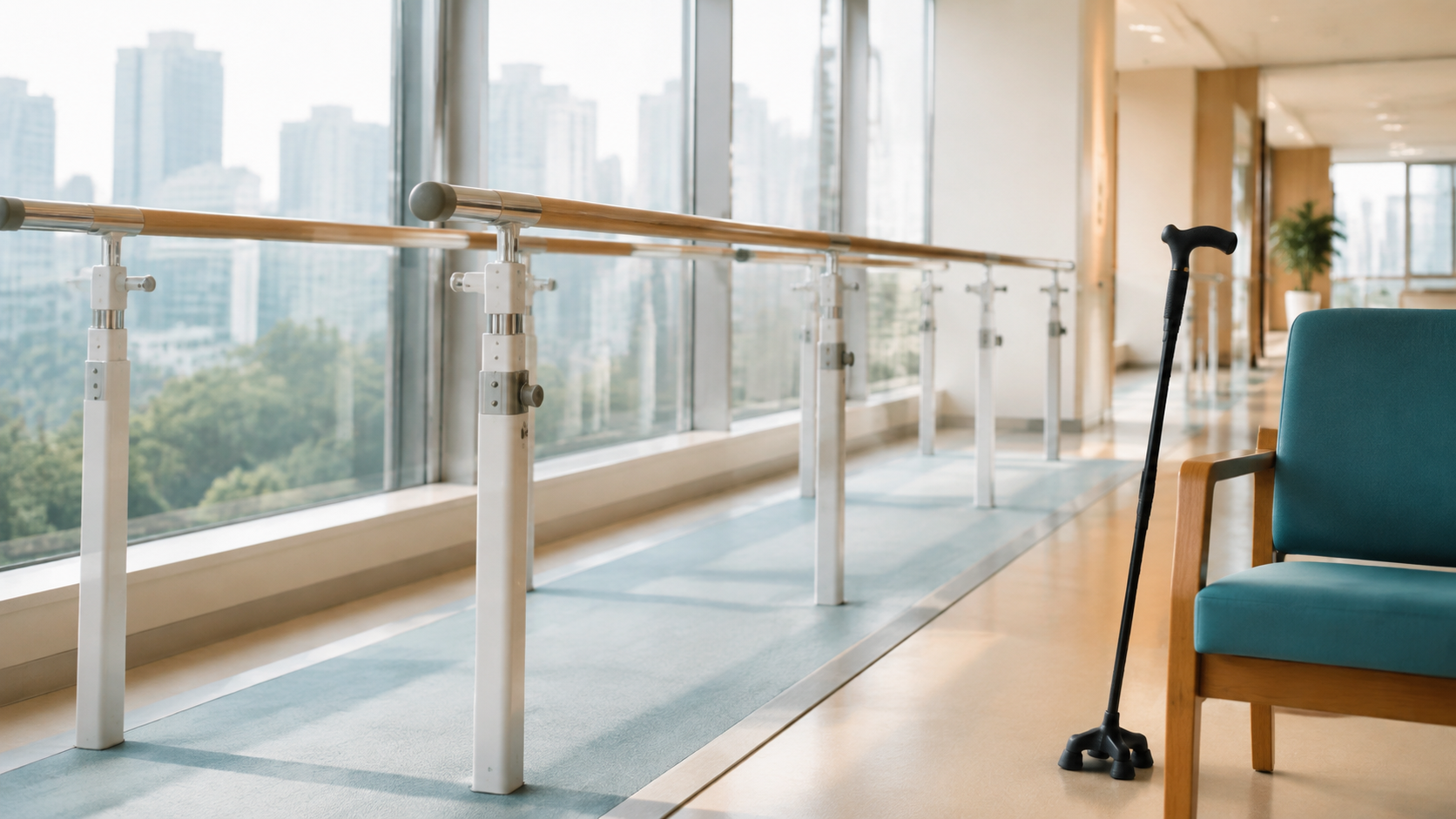
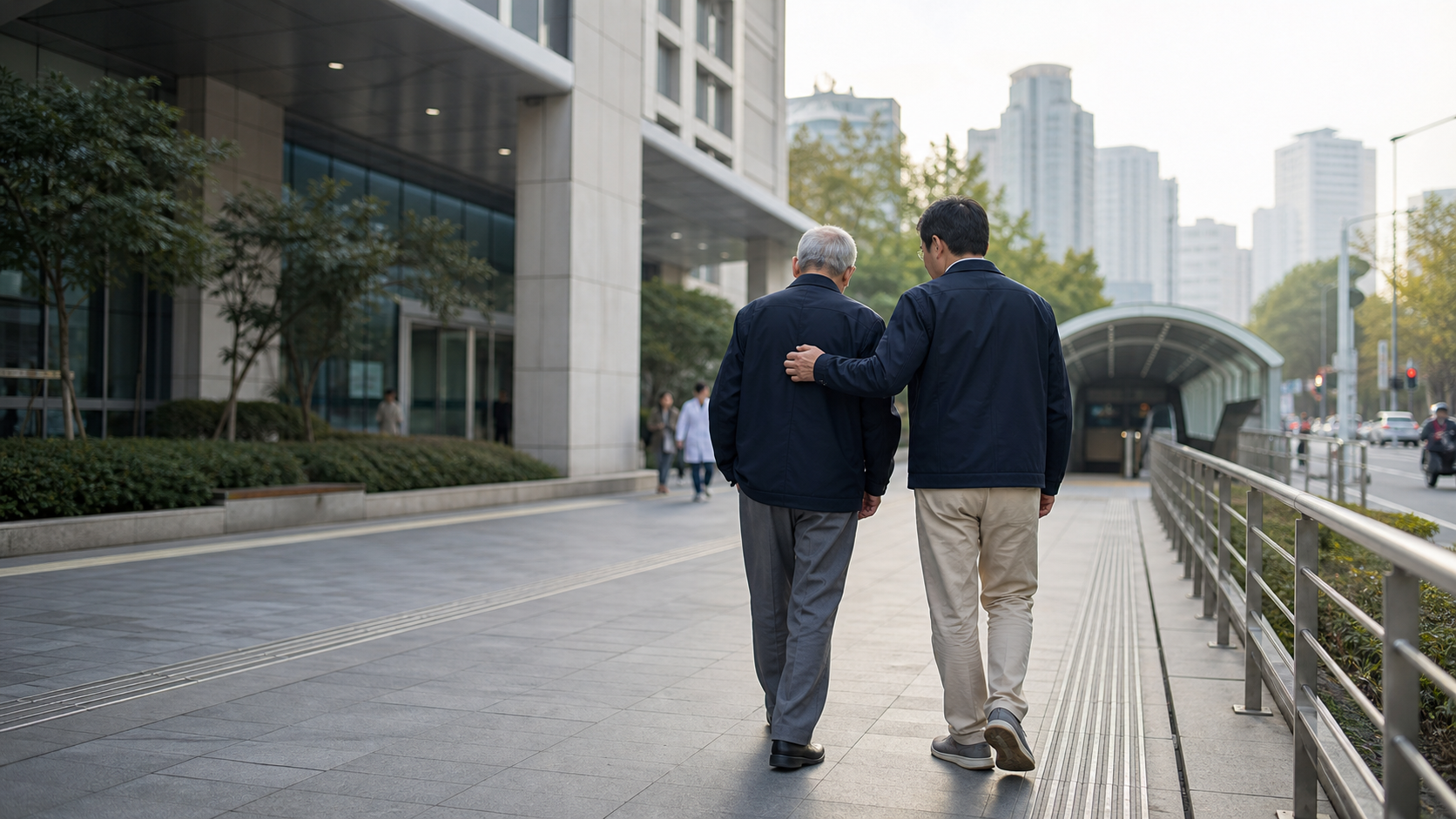
While living in China, I took my dad to Chengdu Second People's Hospital because he had a persistent throat problem. I recorded the journey from booking and arriving at the hospital to seeing a specialist, paying the bill and collecting medicine. This is not a ranking of healthcare systems. It is what my father and I experienced on one day: how did a large city hospital work in practice, how did it differ from the UK NHS route, and what should an international patient check before travelling?
This article is my account of that visit. The prices, waiting times and impressions describe our particular experience and should not be treated as a description of every hospital in China or the UK.
Getting from the metro station to the hospital
My father and I travelled by Chengdu Metro. Chengdu Second People's Hospital has a nearby metro station, so the final walk was manageable. For an older patient, this is more than a convenience. The route affects fatigue, the amount of help a companion must provide and whether follow-up appointments remain practical.
I had considered a more famous and much busier hospital in southwest China. I chose the Second People's Hospital because I could obtain an appointment more easily. That choice taught me something useful: the most famous hospital is not automatically the best option for every outpatient visit. Specialty fit, appointment availability and transport matter just as much.
Booking through WeChat
In the video, I show how I found the hospital's service page in WeChat. I searched for the official hospital account, accepted the booking terms, selected the campus and chose an ear, nose and throat department for my father's symptoms. I could then compare doctors, their levels and their consultation fees, select a date and time, and pay after checking the name, department, doctor and price.
The screen showed weekday and weekend slots. In my experience, a same-day or next-day appointment can sometimes be possible, but availability depends on the hospital, campus, department and doctor. An international patient should ask in advance how passport registration works, whether a Chinese phone number is required, which payment methods are accepted and whether language support is actually available.
Two different routes into care
My dad explained the usual UK route to me. A patient normally registers with a GP near home and books a GP appointment when a problem arises. The GP makes an initial assessment and may refer the patient to a hospital or arrange tests. The strength of that route is an ongoing primary-care relationship and structured referral. The difficulty, in his experience, can appear later, when a patient is waiting for a specialist or physiotherapy.
My impression of the route in a major Chinese city was different. A patient can choose a hospital and department according to the problem, then complete the consultation, payment and pharmacy steps within the hospital system. My father went directly to an ENT-related department rather than first seeing a GP.
I do not want to turn this into a simple claim that one system is always better. The GP model supports continuity and triage; the direct-specialist model can make a particular specialist easier to reach. A fair comparison has to consider the patient's condition, the need for long-term follow-up, whether tests are available on the same campus, and how language and payment will be handled.
What happened during the visit?
I did not film inside the consultation room. After we came out, I explained the result: the doctor thought the problem was related to my dad's throat, which had been bothering him for some time and had recently become worse, and prescribed several medicines. The doctor could speak some English, was friendly and asked where my father came from.
The specialist consultation cost about 100 RMB. At the pharmacy, we collected four or five different medicines for a total of 107.95 RMB, which I roughly described in the video as £11 to £12. The amount of medicine was controlled by the prescription and pharmacy rules; we could not simply ask for extra supplies.
These are the figures from our visit, not a universal price list. Costs can vary with the doctor's level, campus, tests, medicines, insurance status, patient status and payment method. Before leaving, I would ask for the diagnosis, prescription, test results and an itemised receipt. An international patient should also confirm the medicine names, ingredients, instructions and the method for arranging follow-up after returning home.
What I learned from comparing the NHS
My dad pointed out that NHS prescriptions can be free for people who meet certain age or other eligibility rules in England. His main criticism was usually waiting time rather than the quality of treatment once it happened. I also want to be clear that the video was not intended to say “China good, UK bad”. It documents one real hospital visit.
The speed and organisation of a large Chinese city hospital made a strong impression on me. At the same time, NHS primary care, funding arrangements, specialist expertise and long-term continuity cannot be judged from one outpatient wait. The reverse is also true: my convenient experience in a city hospital does not mean that every city, hospital level or rural area offers the same service.
My checklist for someone considering cross-border care
- Match the symptoms to the right department before comparing hospital reputations.
- Check whether the hospital has multiple campuses and confirm the exact location.
- Keep booking screenshots, payment records, passport details and hospital contact information.
- Ask whether foreign passports are accepted, what language help exists and whether bilingual documents can be issued.
- Allow time for tests, pharmacy collection, explanation of results and follow-up; do not treat a consultation as a one-day tourist activity.
- Do not choose treatment from a video or comments alone. For surgery, long-term medicines or serious symptoms, seek an independent opinion from a qualified clinician.
The value of taking my dad to the hospital was not that it produced a universal answer. It showed the practical details patients often cannot see in advance: how to find the hospital, select a department, pay, collect medicine and separate waiting time from continuity of care.
Ten viewer comments from below the video
I selected the following ten viewpoints from the comment section and translated or condensed them into English. They are personal experiences or opinions, not medical statistics and not my own claims.
- @tonysutton6381: Born in the UK, later living in Canada and then China for 18 years, this viewer described cataract and hip surgery in Shenzhen as fast and comparatively inexpensive.
- @ricklearn16: After spending two days in a Chinese hospital with a toe infection, this viewer said the tests were affordable and a US surgeon reacted positively to the antibiotics prescribed in China.
- @Tewbum: A New Zealander living in China described an ankle fracture, X-rays and CT scans, a choice of surgery or a cast, and a total bill of about 1,200 RMB.
- @qiaowei7542: A family returning to Chengdu from Germany described a child-friendly dental clinic in a shopping mall where a tooth extraction took less than an hour.
- @lyndakling901: This viewer said the language difference would make her hesitate, but added that her own UK GP, emergency and weekend urgent-care experiences had generally been fine.
- @muppet64: A UK viewer reminded readers that the NHS can still provide high-quality care and specialist treatments that are not available everywhere.
- @leahmarkwell5707: She said many people in China have government medical insurance and that her father's endoscopy, colonoscopy and treatment were substantially covered.
- @yufish6576: This viewer noted that 1,200 RMB may not seem high to a foreign visitor but is not small money for lower-income Chinese families, and that efficiency can involve intense staff workloads.
- @江弘-i9g: He cautioned that a city hospital shown in the video should not be taken as proof that rural residents receive the same quality of care; regional access and affordability still matter.
- @shriibrahim4424: He attributed the difference between the systems to different governance priorities. That is a strong comment-section opinion, not a conclusion established by my visit.
My sources and limitations
I prepared this article from my own video record, the English automatic captions, the video description and the comments that were accessible when I reviewed them. YouTube comment order and visibility can change, so this is not a complete comment database.
This article is not medical, insurance, visa or cross-border treatment advice. Hospital processes, prices, medicines and policies can change. Check the latest information with the target hospital and relevant official authorities before travelling.

 2026-09-29